




What beach vacation feels complete without a taste of the shore? On your next beach getaway, be sure to stop and grab some oysters in Ocean City, NJ. While you might be accustomed to eating shellfish like shrimp or crab, venture outside your comfort zone and give oysters a try. Even if you’ve had oysters before somewhere else and weren’t entirely impressed, visit one of the many seafood restaurants in Ocean City to see how Jersey oysters rank on your list. If you’re nervous about trying oysters for the first time, don’t fear — we’ll take you through everything you need to know about oysters. Whether prepared cooked or thrown back raw, oysters might become your new summer family vacation staple.
Oysters live across the U.S. in brackish or salty waters from coast to coast. Before they become what you see on your plate, they start super small and tend to resemble clams as they freely float in the water. After a while, oysters cluster on rocks, shells or other hard surfaces under the water. As they grow, oysters fuse and form reefs for different marine life, like blue crabs or shrimp, to live.
Just as they are essential to marine wildlife, oysters also play a major role in keeping the ocean clean and are a source of food and income, as they provide jobs for many Americans. According to the National Oceanic and Atmospheric Administration, 37 million pounds of oysters contributed to $192 million of the total $418.3 million marine species on the 2016 Aquaculture Production Highlights. So, how exactly did these ocean critters become a beloved beach bite? Oysters’ history goes back hundreds of years.
In America, oyster harvesting dates back to pre-Columbian times, when Native American women harvested oysters and prepared them for consumption or preserved them to use in the winter. Later, in the early 1800s, only wealthy people were the primary oyster consumers. However, toward the end of European settlement and for the time after that, colonists harvested oysters locally through methods like raking, handpicking or tonging. These methods eventually transformed into industrial fisheries following upgrades to vessels and trains, where people could transport large amounts of oysters across different towns and cities.
As oyster production grew around the early to mid-1880s, people from all economic classes indulged in oysters as consumer prices dropped. From around 1880 to 1910 — what historians consider the oyster production peak — the U.S. produced up to 160 million pounds of oyster meat each year. New Jersey was part of this early oyster boom in the 1800s as well, and oyster harvesters in the state often kept their bounty in floats that tied to packing house docks or remained along the shore. These floats could hold roughly 600 bushels of oysters each.
Since then, the oyster industry has found new and improved harvesting methods, although the industry today isn’t quite as booming as it once was. For New Jersey, specifically, the state has worked hard to rebuild its oyster population and keep the industry alive after rains from storms like Hurricane Irene and Superstorm Sandy wiped out almost 80% of oysters in some regions of the Delaware Bay. Currently, oysters harvested in the bay put about $18 million into the local economy.
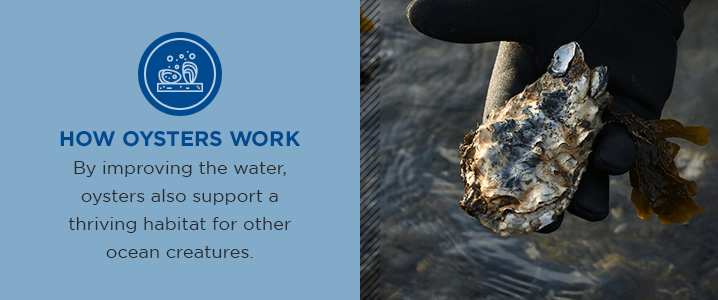
Oysters belong to the Ostredae family and live in shallow waters in oceans around the world. They are omnivores, often feeding off small pieces of algae or phytoplankton in the water. Oysters are filter feeders that extract the algae and other various food particles from the water they draw over their gills. Due to this unique ability, oysters also work to improve water quality and can filter 50 gallons of water each day per oyster. By improving the water, oysters also support a thriving habitat for other ocean creatures. However, oysters suffer in heavily polluted waters. They are only as safe to consume as the environment they live in.
Oyster shells are usually oval or pear-shaped and are typically a light grayish color, while the inside of the shell is white. They can range in size from three to 14 inches, depending on the species. Don’t confuse oysters you would eat in a restaurant with those that produce pearls, as they belong to different families. In captivity, oysters can live up to 20 years, where they will change genders at least once and reproduce by spawning when the water warms up. You can cook oysters, or eat them raw, but if you choose the latter, keep them alive until right before consumption to ensure freshness.
Hog Island Sweetwater oysters are known as one of the best types for eating raw due to their small size, perfectly balanced sweet and salty flavor, and tender texture. Kumamoto oysters are also widely considered superb for raw consumption, boasting a subtly sweet taste with nutty undertones. Both varieties have impeccably clean and pure flavors best enjoyed without culinary embellishments for an authentic impression of the ocean.
Those seeking a larger bite can appreciate pristine Atlantic oysters in the raw form, such as the mild and creamy Wellfleet from Cape Cod or plump Delaware Bays from New Jersey. Whichever you prefer, only consume oysters fully fresh shucked before dining to savor their pure essence drawn straight from the sea.
Since oysters are a type of shellfish, they can have beneficial effects on your health. They are an excellent source of protein, while keeping your meal low-calorie and lean. Oysters are also an ideal source of nutrients like vitamin B-12, zinc, iron and magnesium, while staying low in saturated fats. Meanwhile, the omega-3 fatty acids in oysters help promote heart health and growth and development among children. Since there are various oyster species, it’s a good idea to familiarize yourself with the different types before sitting down and ordering some in a restaurant.
There are five main species of oysters consumed in the U.S. — Pacific oysters, Kumamoto oysters, Atlantic oysters, European flat oysters and Olympia oysters. Here’s your guide to oysters by species.
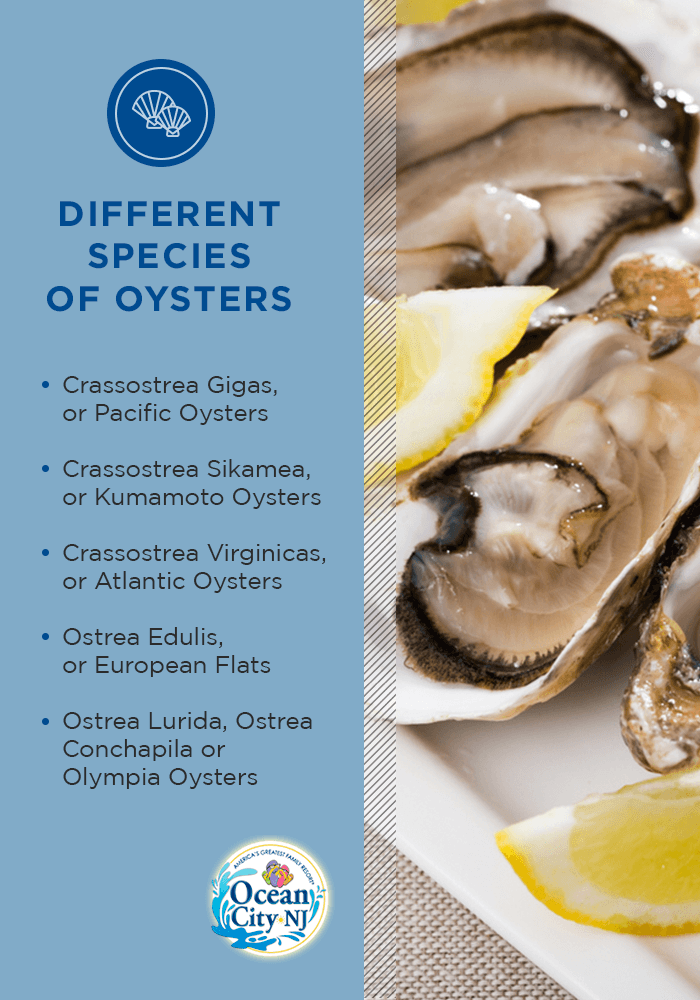
The Crassostrea gigas, better known to most people as the Pacific oyster, are popular on the West Coast in the U.S. and in Europe, and may even grow more popular than native Olympia oysters. These oysters are the most cultivated in the world. Pacific oysters have a rich, sweet taste and sharply pointed or fluted shells. Often, people name these oysters after their source, like Fanny Bay or Totten Inlet. They grow rapidly, usually reaching lengths of four to six inches within two to four years — much larger than Olympia oysters. The term “Pacific oysters” used to describe all the small oysters along the Pacific, but Kumamotos have since developed as a separate species.
Japanese oyster farmers were the first to cultivate Kumamoto oysters, or Crassostrea sikamea, but they have since grown popular in the U.S. Northwest and along the West Coast. These oysters have a sweet taste, similar to the Crassostrea gigas, but also have nuttier flavors. They are a great beginner oyster for those on the West Coast, and the perfect option for those seeking sweetness. The oyster shell is also similar to the Pacific oyster, but tends to resemble a cup or bowl shape more closely. Kumamoto oysters usually spawn later than other oysters and wait until the water is warm to do so. However, these oysters are still available year-round and take roughly three years to reach about two inches across — the appropriate size for harvesting.
Crassostrea virginicas, also known as Atlantic oysters, Eastern oysters or American oysters, are popular on both coasts in the U.S. and make up the bulk of all oysters harvested in the U.S. They tend to have cupped shells that typically spread about two to five inches across. Oysters like bluepoints, wellfleets, malpeaques and beausoleils are all Atlantic oysters. Beausoleils are an excellent choice for those trying them for the first time on the East Coast, as they have a delicate and salty taste.
For salt lovers, there are plenty of Atlantic oysters to satisfy your cravings, like Pemaquids or Olde Salts, for example. People first found bluepoints on Long Island’s Great South Bay, where people still raise true bluepoints. However, today, the term “bluepoints” generally refers to any Atlantic oyster served on the half-shell. These oysters are a typical treat in states like New Jersey.
If you’re already planning your next vacation to Ocean City, New Jersey, keep an eye out for any of these famous Atlantic oysters served around the state:
Ostrea edulis, better known as European flat oysters or Belon oysters, first arrived in the U.S. Northwest from Europe in the mid-1970s. “Belon” refers to the Brittany region of France where these oysters grow, so not all European flats are genuine Belon oysters. However, for oyster experts, a true Belon is often at the top of their oyster grail list. European flat oysters have smooth, flat shells and tend to have a meatier texture, even with almost a slight crunch. The oyster meat is also a pale yellow or greenish color and tastes like minerals and seaweed.
Ostrea luridas or Ostrea conchapilas, more widely known as Olympia oysters, are the only native oysters to the U.S. West Coast. These oysters are easily recognizable due to their diminutive nature, usually about the size of a quarter, and have a coppery, but sweet, taste. These oysters are unique, so if you enjoy oysters but haven’t tried Olympias yet, make sure to put them on your list if you want to taste them all.
Many Olympia oysters found in restaurants and at the market grow in the Puget Sound and British Columbia. They were extremely popular during the Gold Rush in San Francisco, but then began declining, leading many to believe Olympia oysters had virtually gone extinct for many years. However, Olympia oyster populations still exist, although they have been falling for more than 100 years. Many are boosting efforts to increase these populations and protect the Ostrea lurida from dwindling.
Although all oysters share some similarities, don’t write off oysters altogether if you’ve tried them but weren’t wowed yet. Since there are different species of oysters, not all are going to taste the same. Give each variety a try before you order a plate full of the same type of oyster.
Restaurants may serve oysters in a multitude of different ways — steaming, pan or deep-frying, stewing, smoking, pickling, poaching, roasting or baking, although many prefer to consume them raw. However, if you plan to eat raw oysters and it’s your first time, ordering and figuring out how to eat them at a restaurant can be intimidating. From smells and appearances to getting them out of the shell and into your hungry stomach, here are a few tips on what to keep in mind when you order and eat oysters on your next family vacay to the beach.
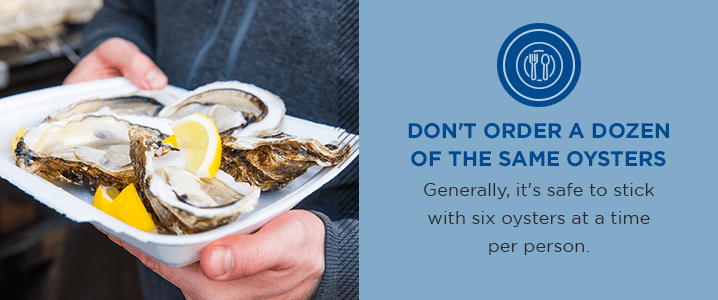
Most seafood restaurants that serve oysters will serve them in groups of six or by the dozen. Generally, it’s safe to stick with six oysters at a time per person. There will often be a list of different oysters to choose from, so don’t be afraid to ask any questions if it’s your first time ordering raw oysters. Additionally, don’t be scared to order different varieties of oysters. You can learn more about what you like, and you won’t get stuck with one option when you order various oysters. However, you should try two of the same variety so you get a better idea of its flavor. If you order six oysters, keep it to no more than three different types. When you order a dozen, you can order up to six different varieties, for example.
If you’re consuming raw oysters, you must examine them to make sure everything looks and smells as it should. Most of the time, restaurants will take care of the shucking process for you right before serving raw oysters on the half-shell. Oysters should stay alive until right before serving to preserve freshness, and you can always ask the server or supplier for the shellfish tag to confirm the date of harvest. Your oysters should have liquid and look hydrated inside, so avoid eating oysters that appear dry and are sticking to the shell. Give your oyster a sniff, as well — if it has a strong smell resembling rot, sulfur or gasoline, for example, skip it.
If your oysters pass the test and are ready to eat, you likely need some guidance on how to do so. You can start by sipping out some of the excess liquid inside the oyster if you’d like to, since they can sometimes contain a lot. Plus, tasting this first can give you a better idea of the oyster’s salinity, so you know what to expect. In some cases, you may even opt to pour out a bit of your liquid, which some may perceive as controversial. Be careful doing this, especially since you wouldn’t want to drain the oyster completely.
You may want to pick up the fork only to slightly move the oyster around inside to make sure it’s detached and ready to slurp down. Once you’re sure the oyster is separate from its shell, put the fork down and pick the oyster up. Use the wide end of the oyster to slurp the oyster back, give it a chew or two and swallow. While some may choose to consume the oyster without chewing, you won’t get the full flavor without biting into it. When you finish your oysters, you may decide to flip over the shell to let your server know you’re finished. This unwritten rule is standard oyster etiquette.
It may be tempting to dress an oyster up with the lemon, cocktail sauce or other mignonette sauce they come with, but be cautious with the condiments, since they mask the oyster’s pure flavor. Some recommend avoiding the sauces and sticking with only a small amount of lemon, gently drizzled over the oyster for a brighter taste that still allows the oyster’s flavor to come through. Many experienced oyster connoisseurs prefer their raw oysters pure and unadulterated.

Oysters are a classic summer staple that gives you an authentic taste of the beach. Whether you want to try raw oysters in New Jersey or prefer them prepared another way, there are plenty of places to eat in Ocean City, New Jersey, on your next family vacation to satisfy your oyster craving. Every year, hundreds of thousands of vacationers visit OCNJ, “America’s Greatest Family Resort,” for its beautiful beaches, Boardwalk loaded with things to do and, of course, its plethora of delicious restaurants with tasty seafood. Don’t wait — start planning your next family vacation and contact us today for any further questions.